Serendipities Along the Path

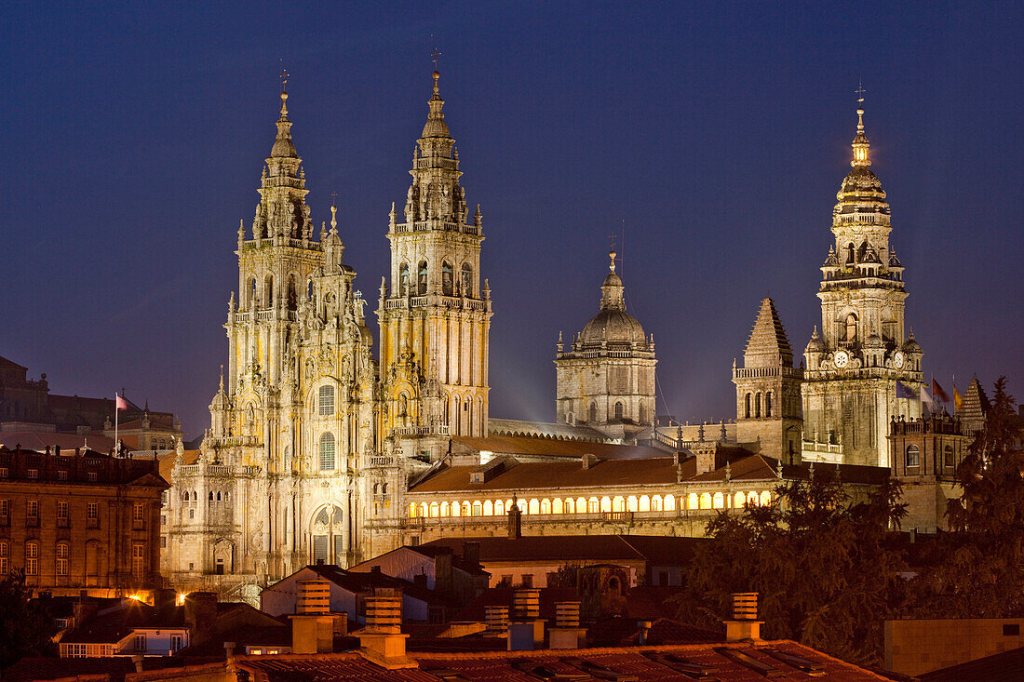
In Spain, dinner is enjoyed later in the evening. Heck, in most of the world the evening meal takes place later than in the United States. But in Santiago de Compostela, the final destination of every Camino route, activity in the old city center can linger late into the evening. It was the day after our arrival in Santiago, the first visit to the city for each of our group. We had already completed all the obligatory customs expected of pilgrims who arrive at the Cathedral in the center of the city. We had obtained our certificates at the pilgrims office, celebrated in the cathedral’s main courtyard with pictures to prove our arrival, and we had attended a pilgrim’s mass, complete with the storied botafumeiro swinging high above our heads. 

Dinner had come late, maybe even late for Spaniards. We had spent the day winding our way over mountain passes (this time in a van, rather than by foot) so we could visit the “end of the world” – Fisterra and Muxia – along the Costa da Morte. Fisterra (also called Finisterre) is a dramatic perch above a steep rocky peninsula that juts into the Atlantic. Its Latin roots, Fin, end and Terra, earth, meant that those Romans who gave the area its name believed that they were standing at the end of the earth. 

Weary as we were, it would have been easy to call it a night after filling our stomach with local gastronomy. And some in the group did. But I was curious. How often do you get to spend time in a city like Santiago?  “Let’s walk around the Cathedral before we head back to the hotel,” I suggested to my daughter.  Walking through the narrow city streets toward the cathedral, we passed other shops and restaurants, many still alive with chatter around tables that spilled out onto the pedestrian streets. 

The cathedral is a huge baroque-style building that commands multiple city blocks. Walking around it, with its four squares, takes a bit of time and offers not only different perspectives of the building but of the city as well. I wondered; would any pilgrims be found at this late hour? Would the cathedral be ablaze in modern artificial light? 

The Praza das Praterias square that earlier in the day had featured brass bands and ques of pilgrims waiting their turn to enter the cathedral was now quiet.  So was the Praza da Quintana de Mortos, where earlier we had enjoyed a snack at an open-air bakery. But as we wound our way toward the northern side, we heard a powerful tenor voice performing opera music above the background chatter of many pilgrims who were stopping to listen or passing by. This tenor was taking advantage of the acoustics found in the Arco de Palacio, a pass through under a section of the cathedral that leads to the largest of the cathedral squares – the Obradoiro Sqaure.

Opera isn’t normally going to grab my attention, but there was something about the medieval European city at night that made this genre appealing. He was performing a familiar tune from the Marriage of Figaro and using his performance skills to encourage the crowd that gathered to join him in certain call and response sections of the song. Hearing opera performed masterfully by a street performer in an ancient Spanish city is a memorable experience! 

As we entered the large Obradoiro Square, the crowds that had gathered there in celebration of their accomplishment were now dispersed. But we quickly noticed that an equally large gathering of visitors had crammed in under the portico of the Palacio de Rajoy (Royal Palace) where a traditional Spanish folk band was performing energetic numbers to a lively crowd. Galician dancers accompanied the musicians as the crowd gleefully clapped along. Minutes after an upbeat song finished and the cheering from the crowd subsided, the cathedral bell tolled 11:00 pm.  

Reese in front of the cathedral, around 11:00 pm. (Yes, its still dusk!)

Each of these happy happenstances were feasts for our eyes and ears. These are the kinds of travel experiences that stick with you for years to come. But happenstance may not be the best way to describe the nightcap to our long day. Better may be the word serendipitous. Serendipity generally means “the development of events by chance in a happy or beneficial way.” But while I didn’t know what I would find by returning to the cathedral at that late hour, I’m not sure that it was completely chance or happenstance, either. Rather, I was drawn by curiosity and open to experiences beyond the expected plans. What my curiosity provided me was a feast of the senses.

Serendipity, I’ve learned, is a word coined by Horace Walpole, fourth Earl of Oxford, in 1754. He first used the word in a letter to Horace Mann to describe a surprising discovery he made. Since the word was new, he takes time in his letter to inform Mann how the word was inspired by fairytales of Persian origin. These fairytales, known in English as the Three Princes of Serendip, were the travel tales of three princes from the Island of Serendip – another name for Sri Lanka. These stories place the young princes in situations in which their observations and discernment allow them to solve riddles that vexed the locals they encountered. Walpole describes the princes this way: “they were always making discoveries, by accident and sagacity, of things they were not in quest of.” In honor of these princes, he refers to his own unexpected discoveries as serendipity. “A very expressive word of accidental sagacity.”  

I had to look up the word sagacity. I’ll save you the effort. Sagacity comes from the Latin sagire, which means to perceive keenly. (Its similar to the word sage, but the two words, surprisingly, do not share the same root.) To have sagacity is to possess the ability to wisely discern. And this separates the meaning of happenstance from serendipity. A traveler and more importantly here, a pilgrim, needs to approach pilgrimage with sagacity. Or, to be observant and curious about the path, the people, and places one will encounter. My curiosity and desire to soak in as much of Santiago as I could allowed me a serendipitous experience around the cathedral.   

On pilgrimage our senses are heightened. We become are alert to the vibrant colors of flowers we pass, the smells of a roadside market, and the taste of a crisp beer at the end of day’s walk. But at home, what happens to our senses? Do we approach our days with sagacity in order that just maybe something serendipitous will occur? The same spirit of God that shows up in the beauty of flowers or a conversation with a fellow pilgrim is just as available among the events and people we interact with on a daily basis.  

One of the lessons I am keeping from my first Camino is that serendipitous moments available on the road are also found at home. I am thankful for the wonders I have encountered in my travels. But my family, friends, and coworkers are gifts, too. There is a beauty in the people and places of central Virginia that matches the majesty I see when I am in a different place. So, my pilgrimage has reminded me of one of T.S. Eliot’s most famous lines from his poem Little Gidding:

“We shall not cease from exploration
And the end of all our exploring
Will be to arrive where we started
And know the place for the first time.”


Stepping Into the Unknown

It’s a dangerous business, Frodo, going out your front door. You step into the road, and if you do not keep your feet there is no knowing where you might be swept off to. – Bilbo Baggins, Lord of the Rings

It’s clear all the way through history that practices are primary and beliefs are secondary. – Robert N. Bellah

In less than a month I’ll embark on my first Camino de Santiago. I’m leading a group of novices who will each step foot on this ancient path toward Santiago de Compostela for the first time. This means the way is completely new and unknown to each of us. Though I am organizing the trip, none of us are experts. Which I am guessing will be a unique feature.

The concept of pilgrimage is not new to me. I’ve read memoirs, studied the history, and written often about it, making it central to my doctoral thesis. But I’ve been surprised at the difficulty I’ve encountered describing to others why I believe a pilgrimage is a necessary component of a growing life of faith. Further, why should someone entrust me with their hard-earned money and time off in order to hoist a backpack on their back and walk an average of 12 miles a day along the dusty trails of northern Spain? Honestly, it’s been a frustrating experience, given my “expertise.”

But just this week it occurred to me why it’s so hard to convince the masses to walk toward an old Cathedral in Spain that supposedly houses the remains of Saint James: I’ve been appealing to their head instead of their heart. So much of education and faith formation over the last 400 years has focused almost exclusively on knowledge. Thanks to René Descartes, humans have placed more and more value on what we can know and control, rather than what we intuit, feel, and experience. For the religious, this means we’ve placed primacy on what we believe, rather than our experiences. 

And so western Christianity has placed increasing emphasis on explaining and then defending a faith that beforehand had been largely understood in terms of relationship and mystery. I can’t convince you that Jesus is God incarnate any more that I can convince you that walking for eight days, ten days, or two weeks will bring about transformation. Nor can I sway you to see this as a good thing – especially if you believe your life is already pretty good. 

But an overlooked fact remains – we are relational creatures who make meaning through experiences. And an encounter with the risen Christ and the hospitality of a stranger along a well worn trail can change you. It’s also why a concert shared with thousands in a stadium can be so exhilarating, a week at a youth camp can be so moving, or sharing a unique culinary experience can be so memorable. Shared experiences touch the heart and the head through our five senses. Which is why experiencing the warmth of the sun, the deep greens of the rolling hills, the chatter of a babbling brook, the ache of sore feet at the end of the day, and the salutation of “Buen Camino” by a fellow pilgrim can widen our appreciation for God’s gifts in a way that beliefs alone simply cannot.    

If we are lucky, we have at least one pivotal experience when we are young. It might be learning to live on our own, when we only have pennies to our name but time to embrace new ideas and new friends. It might also be a trip that takes us away from the familiar, briefly giving us time to examine our life and the world from a different angle. As we age, these experiences might come in the form of a surprise – we lose a job, a loved one suddenly dies, or a relationship ends. 

I can name many of these experiences over my life. And so far, each of them has taught me as much about myself and God as any doctrine or dogma. Put positively, scripture and tradition help us recognize the goodness of God in our experiences and guide our journey toward more encounters of the gratuitousness of God in all of creation. 

These moments shouldn’t be relegated to early life or special missionary callings. Instead, everyone can find ways to practice pilgrimage. We all can benefit from routinely removing ourselves from the day-to-day so that we become attune to God’s presence. In so doing, we may be surprised just how often we encounter God’s Spirit shimmering in a placid lake, or in the cool of a morning breeze, or in the hospitality of a stranger. 

Pilgrimage is a practice that intentionally places us in the unknown in order that we might experience God in ways that a set of beliefs alone cannot provide. We certainly carry scripture and tradition with us into this practice, but doctrine by itself is flat whereas a pilgrim crackles and pops with energy, giving life to the beliefs we profess. 

Logically

Do you keep a calendar? Or some kind of schedule to help keep track of your life and the commitments you make? What do you feel when you look at that weekly to-do list?  

Sometimes I feel important. Look at all I have to do and all who are depending on me!  More often, however, I feel a bit of dread. Look at all I have to do! And as I attempt to go about completing the list, more gets added. Surprises arise. Chaos ensues. The world, it feels, conspires against me. 

At the beginning, in Genesis 1, we are told there was nothingness, a void. I guess that is the opposite of my full calendar. But then God swept over the face of the waters and started to put things in an order. First, light. Then, sky and water and land.  After six days, God looked at this ordered creation and considered it very good. Good enough to stop creating for a moment and rest and just soak it all in.

At the beginning of the gospel of John, the author has a similar view of creation but puts his emphasis on the source of such a very good creation. The author labels this source “the Word.” Brian McLaren labels it as logic. This logic is the key, the Rosetta Stone, for understanding the purpose of flowers, birds, mountains, trees, stars, and you and me. And it is essential for finding a path out of chaos to wholeness and rest.    

And chaos is the link between Genesis 1 and John 1. In Genesis, disorder is put into order through the word/logic of God. In John, the logic of God enters the chaotic world as a human – Jesus, to a place – Nazareth, and to a people – Israel. And those people who had strained to do everything possible to please the God of creation in large part missed him. Were they too busy to notice? Too important to be bothered?

We modern people tend to find our value based on the state of our busyness. Often our conversations begin around stating how busy we are. We may sound frustrated, but we wear it like a badge of honor. Look how important I am! The world around me wouldn’t function without the strain and toil I give! But often such toil doesn’t lead to our flourishing. It leads to bitterness and exhaustion. And for what? To toil more? Ecclesiastes labels such a posture as pure vanity. A chasing after the wind. Pointless.   

God’s creative work has a point. And it leads him to a moment of sabbath when he can rest by enjoying what he has created. Isn’t that what we really want, too?  Work that leads to fulfillment and joy? A part of who we are is wrapped up in how we contribute to the world in which we are placed. A flourishing world leads to a flourishing life and vice-versa. But when our work doesn’t contribute to a healthy society, we become disappointed, discouraged, and even depressed.  

Light and life followed Jesus, the logic of God, wherever he went. And to many his logic seemed too gratuitous. He ate with sinners, partied with tax collectors, let women anoint his feet with costly oil, and paid attention when children, leapers, and foreigners came near. None of his attention was in an effort to gain approval from the institutions of his day. But all he did pleased God, his father. It even led a Roman guard to proclaim that, “surely he was the son of God.”   

We too are God’s children. Can others tell? 

  • Where do you see logic and order in our present day?
  • Where do you see disorder and chaos?
  • Who or what is responsible?

Have You Started Living?

“We are the sum total of our experiences. Those experiences – be they positive or negative – make us the person we are, at any given point in our lives. And, like a flowing river, those same experiences, and those yet to come, continue to influence and reshape the person we are, and the person we become. None of us are the same as we were yesterday, nor will be tomorrow.”

– B.J. Neblett

The resolution of Charles Dickens’ A Christmas Carol finds Ebenezer Scrooge, the once shallow, isolated, and insatiable tycoon a changed man after a visit from three spirits in the middle of the night. When he awakes on Christmas morning, it’s as if he is seeing the world for the first time – and realizing how much it is a gift. If it were only so easy for us.

A Christmas Carol qualifies as a classic because its theme continues to challenge 21st Century readers about what is important in life; what is worthy of our pursuits. Dickens uses three visions of Scrooge’s past, present and future to reveal his core values and how they lead to emptiness. Middle school readers have been learning for decades that it is better to be a Bob Cratchit than an Ebenezer Scrooge.

Life isn’t that black and white, though. Many of the choices we are confronted with aren’t so clearly defined as money and success verses family and friends. And that is where we get stuck because I am betting most people aren’t going to blatantly choose Scrooge’s path, no matter how much they value wealth and success. Yet many still take it. And the joy and wonder of life becomes elusive.

But this isn’t about the evils of money or the deception of greed. Instead, it is the beginning of a conversation around recognizing what is important, what we value, and how we can recognize this in our daily decision making. Because it’s those seemingly small decisions that over a lifetime creates a Scrooge identity, a Cratchit identity, or a thousand other identities that bring value or vice to humanity.

Each of us are in process – we have the potential to always be growing, learning, and changing over a lifetime. In fact, to stop the process of becoming is to stop living. Physicists tell us the universe is ever expanding from the point in which it began, beginning with a huge release of energy that keeps expanding outward. If this is true, then it stands to reason we, like the universe, are made to continue on a path of growth, maturity, and discovery. For Christians, that path begins and ends with God.

Much of the first half of life is a journey toward finding purpose and security. Concern over what will I make of my life is also caught up in the question of whether the circumstances around me will allow for flourishing. Every day the path toward meaning and security presents us with choices. How we respond to these choices shape our worldview, and whether we know it or not, our view of God. So our response to the world around us creates the path we walk. And like Adam and Eve, our choices often hinge on whether we think that God is trustworthy.

We only begin to recognize this tension between trusting God’s wisdom and that of our own, through experience. We step across the threshold and embark on a journey, even when we aren’t clear where we are headed or why. The answers – and the motivation to keep walking – are available. But we won’t find them until we set out and embrace the journey along with the inevitable twists and turns, mountains and valleys, and yes, the wrong turns we make along the path.

The best of the Christian tradition invites each traveler to walk this path in the company of fellow travelers. (Those people Scrooge dismissed during most of his life.) With our model traveler being Jesus and our ever present guide, the mysterious Spirit of God, the challenges and the missteps along the way aren’t just understood as failure and success. They are a part of the process of being alive and experiencing the mercy and grace of a loving creator who is beckoning us to discover the joy of his creation. Each step along the way, as we discover God on our path, we also find we are more at home with our questions and even our imperfections.

Life doesn’t start only after we’ve got everything under control. What does it mean to be alive? Each day is a new discovery. Aren’t you eager to find out?

Life Together During a Pandemic

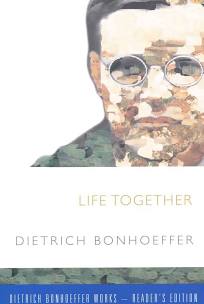
In 2020 we have experienced more disruption, change, suffering and loss than imaginable.  Much of what we have come to depend on has either been put on pause or stopped altogether.  Such large-scale change and disruption can tear at the fabric of social institutions.  The church, however, when at its healthiest, expects these storms to come and is nimble enough to weather them because its hope isn’t found in traditions, status or familiar routine.  Rather, according to Dietrich Bonhoeffer, the Christian community reflects its assurance in God through its life together based on:

  • Spiritual love for one another rather than emotional love
  • Spiritual practices that keep God in the forefront, not the background
  • Solitude before God rather than noise of self-righteousness  
  • Service to another through listening, active helpfulness and forbearance
  • Confession of sins from one Christian sinner to another 

Bonhoeffer devotes a chapter to each of these in his classic book, Life Together.*  Bonhoeffer knew something about Christian life lived together before God; as a professor at Finkenwalde Seminary he was molding the lives of seminarians in the face of the rise of Hitler’s Third Reich.  Everything that Christians had taken for granted about their lives in enlightened Germany were being challenged.  A devout nation, Germany was also on the cutting edge of art, philosophy and innovation.  But out of such success came collapse after the great war, the worldwide depression and devastating inflation that left Germany weak and uncertain. 

Church leaders in Germany traded influence in Hitler’s Third Reich in exchange for a prophetic witness.

The Covid-19 pandemic, a renewed racial reckoning, partisan political rancor, job loss, school closings and no sports (!!!)  have left our heads spinning and grasping for something certain to hold on to.  How should Christians respond in the face of so much change, so quickly?  Bonhoeffer’s Life Together has helped me address this question.  He was clear that an individual Christian’s faith was tied up in the participation and purpose of the larger Christian community.  He believed a Christian community’s life together can withstand these disruptions because its purpose is founded on honoring God’s work in sinful people despite their brokenness.  Their shared daily practices, selfless love, Bible reading, meditative prayer, service to one another and confession didn’t change when the world around them changed.  Rather, these practices prepared them to face difficulties.  They defined the community.  

The world around the faith communities have been altered for the foreseeable future.  Consequently, we have had to change some of the familiar ways we gather for worship and discipleship.  But, has such changes impacted who we are and why we exist as a faith community?  Where we feel it has, we must look at the practices and expectations that make us feel this way.  Are they from God or from our own emotional reaction?  Where we have held firm in devotion to God, we should celebrate and continue in that path.  

Bonhoeffer is teaching me that while changes will come to society and to our churches that are scary, not only can we find blessed assurance in the core practices of our faith, they can pave the way to new life and vitality for our tomorrow.  Pray for the church and its leaders as we navigate this path.  May we do so with humility, forbearance and grace toward one another, because otherwise, change is so hard.  

*Check out Dietrich Bonhoeffer’s Life Together.  There are editions available from Harper Collins and Fortress Press.  It is a brief but “meaty” volume that will have you chewing on God’s wisdom for days and weeks to come.       

Our Collective Liminal Moment – Musings on Holy Saturday and Liminality

Sometimes old words just won’t do.  I’ve tried to tell that to my much smarter wife when she is lovingly critical about words I use like “paradigm” or “liminal” in reference to describing an active and growing faith.  “No one talks like that!” she chides.  

But sometimes we need new words to describe what we face, collectively. And folks, if ever we were in a collective liminal moment, it is now.  

The other night, Beth described the feeling many of us have.  “It’s like we all need to throw up but we dread the discomfort.  It’s really painful and we’d rather put it off but at the same time, we just want to get it over with, so we can feel better afterward.” We are all stuck.  Waiting for what’s next.  Helpless to do much but keep our distance and hope it passes soon. 

The church mission team met the other night to formulate the beginnings of a plan to respond to the growing needs and how we might offer the community a hopeful word.  But there was so much we couldn’t predict. Our normal plans and actions just won’t do in this period of social distancing. And social distancing is the correct response right now.  In doing so, we show that our neighbor’s lives are as important as ours. We are all willing to sacrifice in order to slow the spread.  

But what will the world look like next month, in six months, or a year from now?  Are we just on a brief holding pattern, waiting for things to return to “the way it’s always been” or is this moment pregnant with new possibilities?  In times of crisis, it’s always easier to hunker down and wait for the trouble to pass and for things to get better. But, we can’t assume things will be the same.  And while that reality is potentially sad, it doesn’t have to be the last word.  

In the middle of all this disruption, I have been so tickled with how my church has responded to the need to distance ourselves.  Like most other churches, we didn’t close up shop just because we couldn’t meet together for worship like we had been doing. Instead, we allowed the moment of crisis to force us to re-vision what worship could be like from a distance.  We decided to go live with the acceptable skeleton crew of ten in our church building, using Facebook live as our primary platform for worship. We hoped we could reach as many families as possible this way while acknowledging we would be leaving out some of our members who do not have computer access.   We thought through the changes we needed to communicate and the skills we needed to learn in a hurry and then put together the best livestream broadcast given the means and know-how we had. A month in, we are still learning and improving.  

But we also found a large majority of our members were willing to shift their behaviors to be sure they stayed connected to their church during the pandemic.  Many signed up on Facebook for the first time. Our email news subscription saw newcomers who realized this was the best way to stay in the know. The worship service time changed since we were doing one service instead of two.  Traditional service attendees commented their appreciation of the contemporary service style during the first weeks we live streamed. When the calendar turned to Palm Sunday, we got the same positive reaction when the service went traditional, complete with organ.  But, so far, what has been best is seeing the interaction of our intergenerational congregation throughout the service, over the Facebook stream. Everyone appreciates being virtually together. There seems to be a new appreciation for worship now that we have been spread a part. It is a new energy that can get lost when meaningful experiences fall into habits and we begin to unknowingly take our weekly gathering for granted.  

Liminal space – a period in which someone leaves the comforts of what was but hasn’t yet reached the sure footing of what will be – is admittedly a scary time.  But it also offers the greatest potential in which impactful transformation can take place. Liminal time forces us out of our comfort zone and demands us to think creatively.  

Our whole world is in a moment of liminality.  The thought of that is stunning! What new responses to this jarring moment are we going to create?  What good ideas will come from our time of discomfort? In what ways will this pandemic allow us to create a better world? 

God knows something about liminality, too.  Surprising, right? One could argue that the whole of Jesus’ life was a liminal experience – giving up all claims of divinity in order to live fully as a human on earth.  But two events in the life of Jesus really stand out. Jesus’ forty days in the wilderness, after his baptism and Jesus’ death and burial. The wilderness was lifeless and difficult. The wilderness prepared Jesus for all the times he would be tempted to step out of his humanity and display his God-like qualities in a self-serving manner.  The cross was a symbol of Roman superiority and the ultimate symbol of defeat. Jesus’ lifeless body hanging on the cross had to have felt like defeat to those closest to him. But it ended up being the farthest thing from defeat, which is where we find ourselves on Easter morning – basking in the joy and wonder of the risen savior.

Jesus’ resurrection is something we need to hold on to on this Holy Saturday, during this dark liminal moment in our present reality.  God did something utterly unthinkable but equally creative. God took what on the surface appeared to be the end of another revolutionary at the hands of the empire’s might and intimidation strategy and created another, far reaching outcome.  Like his wilderness temptations, Jesus could have avoided the cross. He could have said, “Do you know who I am?” and revealed his majesty and glory to a stunned crowd. And they would have crowned him king then and there. And his kingdom would have become the Roman Empire.  No better or worse. But instead, Jesus trusted his father and stepped directly into the ultimate liminal moment between life and death. What waited for Jesus on the other side of death wasn’t just his resurrection but the opportunity for new life for all of us who are walking in the valley of the shadow of death.

We are certainly in a liminal moment.  We can’t just wish away this hidden virus.  It certainly appears to be dictating how we live our lives.  But, if we look prayerfully with our heart rather than just our mind, we can also walk confidently into the future with God, leaving what was behind and embracing what appears like death but what just may be a new way of living. 

Lent 1 –

“To be black and to be conscience, is to be in a constant state of anger.” – James Baldwin.

May we amend that to say, “to be conscience is to be in a constant state of anger?” I heard this question posed on a recent edition of the podcast “On Being.” Perhaps this is a little bit of what it means to be prophetic, too. To become transformed into the likeness of the homeless rabbi, means we too must learn to deeply love the creation we find ourselves a part, and not become satisfied to see it continue to slog along the painful path that pits us against them; of winners and loosers; of fear of others, lest we have to share what we have.

This week, we began our Lenten journey by considering how slavery, segregation and racism is has created a rift in our country between the very good creation of God. In order for us to truly seek repentance (to turn and move in the other direction) we have to understand how deeply this sin of seeing our brothers and sisters as the “other” has led to devaluing, exploiting, and outwardly hating each other. Why has this been a feature of human kind throughout the ages? Does the holy scriptures have anything to say to the contrary – to make us repent of such behavior, whether due to our implicit or complicit action? (We know scripture has been used to justify such a worldview – and to that we also lament.)

Please join me in sharing your reaction to the following questions, found at the end of week one of American Lent:

  1. Did beginning this devotional each day allow you to hear the words printed in a different way? How does prayer help us receive challenging words from God and neighbor?
  2. On day one, we were invited into an assessment of “godly grief that leads to repentance.” What did you discover in assessing your giving, praying, and fasting? To whom are you generous? For whom do you pray? For what do you need to grieve?
  3. On day three, we discussed the three-fifths compromise and the temptation to treat people as resources rather than as image bearers of God. How might you be tempted to treat people as sources of support for your interests? Are there systems your participate in, even unwillingly, that treat people as tools to advance others’ interests? What insights or questions emerge from this consideration?
  4. In what ways might your grief over these things produce the fruit of repentance, a change of mind and actions?
  5. How can this group best pray for you this week?

Yes, Virginia, Redemption is Possible

I attended the 53rd Commonwealth Prayer Breakfast last month, on the first day of the  2019 General Assembly’s session.  The prayer breakfast is a good-faith attempt to foster a foundation of good will, cooperation and collaboration built on faith in God.  This year’s theme focused on a crisis in civility that is pulling our nation’s leaders and the country itself a part.  Two former Faith-Based Initiatives Directors for former presidents, one a Republican and the other a Democrat, spoke passionately on behalf of civility in the public sphere.  Eloquent prayers were lifted on behalf of our state by our governor, lieutenant governor, state attorney general, Richmond Mayor, a senator, a house delegate, and a state supreme court justice.  I hope they meant what they said.  We left with the feeling and hope that our elected officials, having broke bread and lifted prayer together, could see the best in one another.

That same month, Huguenot Road Baptist Church, the church I serve, hosted our annual winter lecture series. There, guest presenters challenged us to see God’s presence in the person across the table from us and to seek reconciliation with those from whom we differ because God, through Christ, reconciled us to him when we were far away.   Such reconciliation and a genuine desire to know and love our fellow humans, is how we bring a foretaste of God’s reign to our communities.

Just a couple of weeks ago, one of our presenters, David Bailey, was present with our current Governor, Ralph Northam, and former Governor, Bob McDonnell, as they announced that this year, Virginia would focus on reconciliation in recognition of the 400 year anniversary of the arrival of the first African slaves in Virginia.  This, certainly, is a needed step in dealing, head on, with the state’s dark past and the way the government has treated many of its citizens.  Certainly, 2019 was getting off to a good start.

Then, one week ago, we learned about a photo in the medical year book of Governor Ralph Northam, in which he is alleged to have worn black face at a party thirty-five years ago.  This, for sure, was startling and painful news. To say the least, it was insensitive and made light of many citizens of the commonwealth.  If true, it was a disgraceful mistake that will stain his legacy moving forward.  Making fun of any race by making one’s self look like an African American, Asian American, or Native American is unwise and demands self reflection, especially given the history of how white Americans have treated minorities throughout our history.

But, is Governor Northam’s mistake unforgivable?  Can he continue to lead based on a poor choice he made 35 years ago?  How does one respond as a Christian to the tumultuous week that saw not just Governor Northam questioned, but also Lieutenant Governor Justin Fairfax accused of sexual assault from some years back and State Attorney General Mark Herring admit he, too, wore black face to a party in 1980?

The overwhelming response this week from politicians, the media, and the public has been to accuse and distance themselves from the sitting governor.  Unfortunately, I haven’t heard much nuance discussed in light of this revelation.  As Christians, do we believe people can change?  I hope so!  It’s what my faith is predicated on.  As the Holy Spirit does its work in my life, it brings to light the mis-guided values, ideas, and prejudices that I hold and then demands that I make a choice.  Do I continue to live life my way and be closed to living more like Jesus?  Or, remembering that God, through Jesus, has provided a way for me to start fresh and to live more like Christ, do I embrace the change that God wants?

The good news about Christianity, is that we expect people to change when they encounter Christ!  This is the good news of the Apostle Paul’s life, who went from persecuting and even overseeing the killing of Christians to being the faith’s most prolific evangelist.  Such a change was startling and it took time for early followers to trust Paul.  But such amazing changes are evidence to the God of second chances that Christians follow.

I know I have changed and continue to change as I submit my life to following Jesus each day.  And this change isn’t limited to small areas of life.  It’s in all areas – they way I think about my neighbors, my enemies, and the people who make my life difficult.  I change with God’s help and I believe anyone can change, when confronted with God’s love.

Which begs the question, has Governor Northam changed in the 35 years since his alleged black face incident? I can’t say with certainty and its not up to me. But change yields fruit and it seems that based on his work as Lieutenant Governor and as Governor, he has sought to serve the best interests of all the citizens of Virginia.

My thoughts aren’t written at all to diminish the mistake that Northam made if and when he put on black face.  It is a part of the troubling past that Virginia and all of the United States has to continue to face up to and correct.  But if we as a diverse commonwealth want to earnestly seek reconciliation and common ground so that we together can work for the common good, we have to expect that people are not perfect but that people can change.  I for one am glad people change.  It is evidence that God is at work among God’s people.

I genuinely hope the news of the last week hasn’t completely destroyed the foundation laid at the prayer breakfast back in January or the announcement that our leaders want to seek reconciliation for the evil of slavery, segregation, and Jim Crow that defined Virginia for so long.  The news of the last week certainly has disrupted the good spirit.  But it is really up to us, the citizens, to decide if the game of power politics will determine whether we can really be civil toward one another and expect that change can happen among our neighbors.  Will we continue in our cynicism and distrust?   I pray that we can live up to the high standard set by Christ and not only forgive but expect a real change of heart in those who acknowledge they fall short.

Holy Interruptions

Who likes interruptions?  For most of us, interruptions are a frustration, meaning we have to stop what we are doing in order to give our attention to something or someone else.  I’m especially frustrated with interruptions when I have limited time with which to finish a task.  These days, most all of us seem to be working with limited time.

Is there a way to understand interruptions in a different way?  What are interruptions?  Simply put, it is something or someone who disrupts an order of things – be it our current task at hand or a systematic course of actions we have come to rely on.  Take for instance my day, today.  I have the family van in service to correct the malfunctioning automated sliding doors that do not close properly.  Each time these doors close incorrectly, our family trip is interrupted as one of us must get out of the car and manually close the door.  But today, I was planning on the service work being completed by noon.  That’s what the service center told me upon dropping off the van.  Then they called letting me know they needed a part that wasn’t in stock.  They needed to run to a dealer in Colonial Heights to get the part, delaying the completion until late in the afternoon.  Which would be OK but then Beth reminded me that the kids had dentist appointments at 3:30 this afternoon.  It was an appointment I scheduled six months earlier, at their last appointment.  Who knew then what my day would be like today?  She couldn’t reschedule her patients last minute – I would need to take kids.  This required a jockeying of our one good car and a major change of schedule.  Could I afford to miss some of the work I planned to complete today?    Interruptions can be frustrating and can be a source of anxiety.

But certainly, there are welcome interruptions, too.  When an old friend drops in to say hello.  When your called out of a company meeting that has no end in sight.  When the ice cream truck shows up during a hot afternoon of yard work.  When it comes to interruptions, good or bad, I guess it all depends on our perspective.

In a culture that values productivity, interruptions just won’t do.  Our value is based on what we can produce.  We have no room for interruptions.  After studying the gospels and Acts, however, I am convinced we follow a God of interruptions.  After all, what was Jesus to the powers and authorities of his day other than a disrupter of the status quo?  He often appeared to interrupt those he encountered – calling folks to follow him who were busy at their trade; fishermen and tax collectors alike.  He then would interrupt those he called when they thought they knew best.  Examples like urging children to come near when his disciples wanted to send them away or when Peter wanted to stand in his way of the cross.

In Acts, we see Jesus exit the earthly scene early on but in his place comes the promised helper, the Holy Spirit, in whom Jesus told the disciples they would do even greater things than he.  And if Jesus was disruptive to his disciples’ plans, the Holy Spirit would be even more unpredictable in the way it showed up, where it showed up and in whom it showed up.   I mean, the Holy Spirit first shows up during the Pentecost festival, filling the disciple’s voices with languages in which all the visitors in Jerusalem could understand.  No, the disciples weren’t drunk, but would they have even dreamed this sudden baptism up, even if they had the choice?

Following this scene, Peter heals a crippled beggar at the temple gate (at three o’clock).  Peter could have easily dismissed him.  Certainly, there were many beggars who gathered there daily.  Rather, he heals him and testifies to Jesus’ resurrection.  Peter and John get arrested due to this scene, certainly an interruption.  The Spirit interrupts Ananias and Sapphira, when they make a big deal about giving all they made from the sale of their land.  They are suddenly struck dead when it is revealed that they secretly held back some of the proceeds for themselves.

The whole fledgling community of believers are interrupted when Stephen, one of the first deacons, is stoned to death for his commitment to Jesus.  This interruption had always proven effective in past movements.  Make an example of one, send fear among the rest, watch them scatter and return to the “normal” way things were.  But while the community of believers scatter, the power of the Holy Spirit remains active wherever Christ followers are found.  Which included once unthought-of places and people like the Samaritans and the Gentiles.  Through this disruption, Philip, also a deacon, begins to bear witness to the Spirits movement among Samaritans, he hated rivals of the Jews.  And then suddenly Phillip is summoned to a desert road to interrupt an Ethiopian official on his chariot ride home, explaining the scriptures he was reading and baptizing him.  Even Saul, one of the leading persecutors of Jesus’ followers is interrupted on his way to intimidate more followers when he is struck blind on the road to Damascus Road.

So today’s lesson on Holy Spirit interruptions merely continues a trend.  At this point, one thing is clear:  no one can control or predict the moving of the Holy Spirit.  And in this scene, more walls of tradition appear to be crumbling.  Particularly for Peter.  Peter, raised a Jew, at least had the life-altering experience of knowing Jesus and seeing him crucified and raised to new life.  Then, there was the aforementioned Pentecost scene.  At this point, couldn’t anything happen?  Still, the vision of unclean animals suddenly being acceptable was confusing for Peter.  Do I turn my back on what I’ve been taught?  Whether this vision just serves to prepare Peter for Cornelius’ visitors or not, the tension of the moment has been exposed.  How far does the good news of Jesus extend?  Just to our Samaritan “cousins?”  Or to those who occupy our homeland (Romans) and to those who eat food deemed unclean?

The Spirit bids Peter go and find out.  So he makes his way to the home of the centurion, a God-fearing man and a person who it seems has already heard a word from God (10:3).  Peter’s reception must have been enough proof that he begins to preach the good news of Christ.  Here is where the interesting thing takes place: being already deemed worthy by God, the Spirit once again interrupts Peter’s sermon, lest he think he was saving this family.  All the Gentiles present begin to speak in tongues and praising God.  Peter, who just days ago was struggling to relinquish the tradition of clean and unclean meat was now ready to approve what was already clearly happening – Cornelius’ family was filled with God’s Spirit.  “Can we withhold baptism from this family?” he seems to ask no one in particular.  And more walls that separate God’s children crumbled.

  • What are barriers that keep us from knowing our neighbors today?
  • In the story,  what prompted Cornelius and Peter to cross established boundaries?
  • How do we become present and aware of the Spirit that is at work in us and all around us, even in people and places we least expect?
  • How do traditions provide insight into faith?
  • When do traditions stand in the way of maturing faith?
  • How do we pass on meaningful traditions while remaining open to the wind of the Holy Spirit that will blow where it will?